Reflection of Founding Members
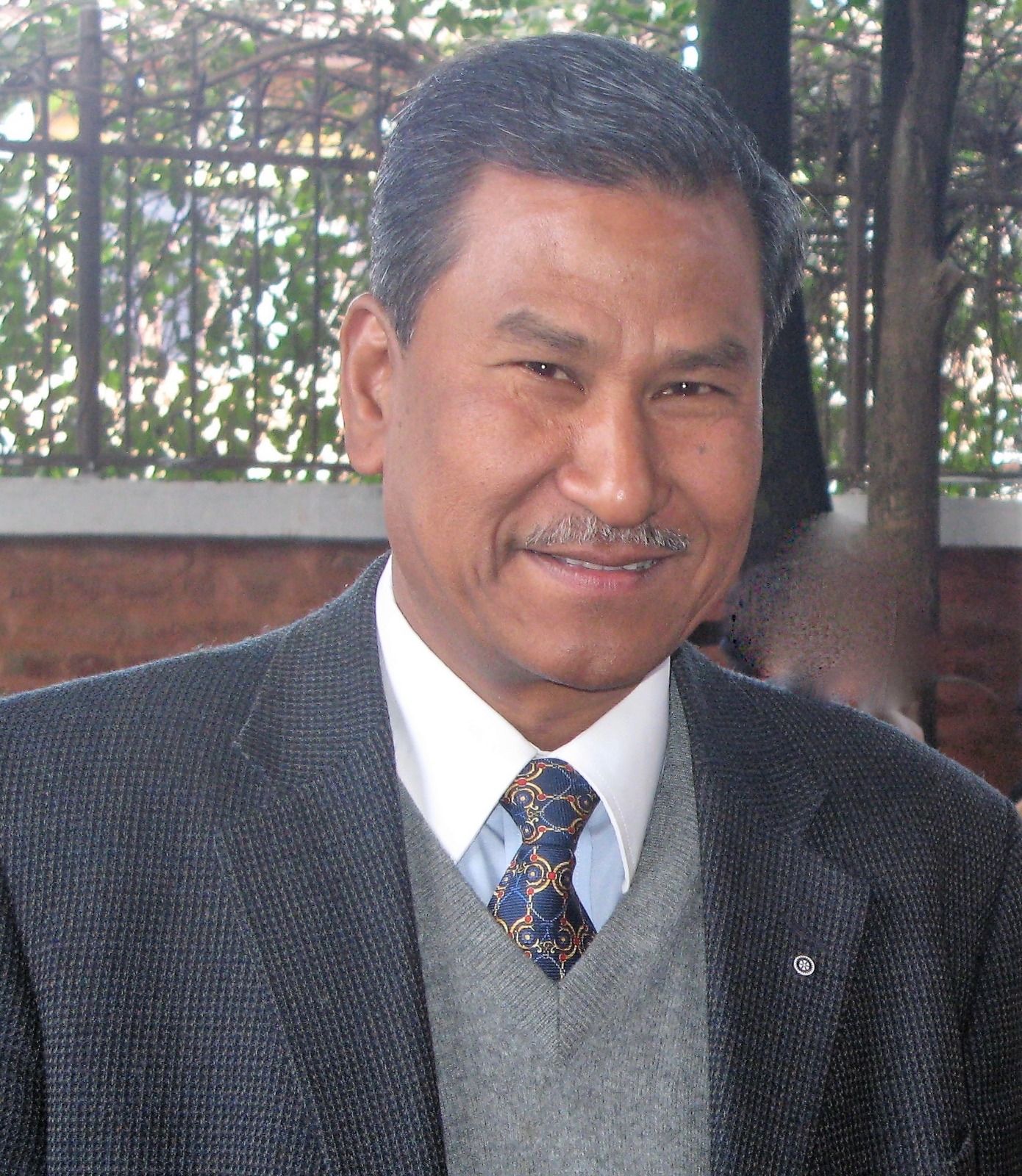
Bijaya Mallapaty
As a charter member of the Former International Professionals of Multilateral Organisations (FIPMO), established in 2016, I am proud to have witnessed its evolution into a key platform for advancing Nepal’s development. Our members, with distinguished experience in institutions like the UN, World Bank, and Asian Development Bank, bring global expertise to support national priorities. Through high-level advocacy, capacity building, and targeted initiatives, FIPMO translates international insights into local action. By partnering with government agencies, civil society, academia, and the private sector, we promote sustainable development across Nepal.
On the occasion of FIPMO’s 10th anniversary, I extend my warmest congratulations to all members and wish the organization continued success in the years ahead.
Bijaya Mallapaty, Former Budget Director, UNICEF Headquarters, New York
Rotarian and FIPMO Life Member
Lalitpur, Nepal, 29 August 2026
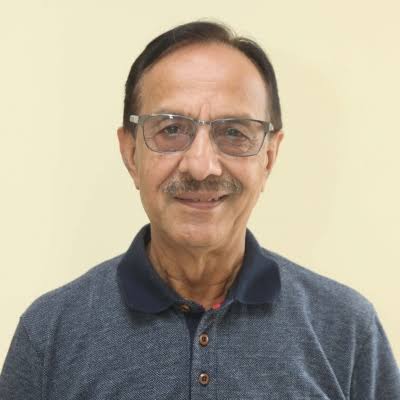
Bishnu Dev Pant
Introduction
FIPMO Nepal (Former International Professionals of Multilateral Organizations) was formally established in 2016 under the patronage of the late Himalaya Shamsher Rana. I was one of the founding members of FIPMO. However, I could not remain actively involved because of pressing responsibilities at the Institute for Integrated Development Studies (IIDS), where I was serving as Executive Director at the time.
FIPMO brings together members who want to use their international experience, knowledge, and expertise to support Nepal’s development. It creates opportunities for members to exchange ideas, learn from guest speakers, and discuss important issues such as sustainable development, foreign policy, and other emerging challenges.
FIPMO also aims to provide pro bono advice and advocacy to the Government of Nepal, while helping members stay connected and share what they have learned from working in different countries and sectors. It can also support community-based programs, local development efforts, and capacity-building activities that align with Nepal’s priorities.
Achievements and Missed Opportunities
FIPMO is a Kathmandu-based group of Nepali professionals who returned home after working with organizations such as the United Nations, World Bank, Asian Development Bank, and other international institutions. Its members bring years of experience from different countries and fields, and many are well respected for their work. When FIPMO was created, there was real hope that this experience could be put to use in Nepal, especially in areas where the country needs more specialized knowledge and expertise.
Nearly ten years later, though, FIPMO still has not lived up to that promise. It has held discussions on current issues and invited some highly respected guest speakers. Those programs have value, but they often miss the people who most need to be in the room: government officials responsible for making and carrying out policy.
Because of that, many good ideas from these conversations never make it into actual government decisions. Holding a discussion is not enough on its own. The real test is whether it leads to better policy, stronger institutions, or practical action. FIPMO’s biggest untapped strength is its own members. They know international best practices, but they also understand how things work in Nepal. That combination could be extremely useful to the government and other national institutions. Nepal often turns to foreign consultants and international agencies for technical help, even though many Nepali professionals with the right experience are already here and part of FIPMO.
FIPMO has reached out to government agencies several times and offered technical advice and support. So far, there has not been much interest in taking up that offer, and it is hard to understand why. Nepal faces serious capacity gaps in many areas. It does not make sense to leave this kind of homegrown expertise on the sidelines.
The Way Forward
If FIPMO wants to make a bigger difference in Nepal, it needs to change how it works. Seminars and discussion programs have their place, but they will not be enough on their own. FIPMO needs to focus more on results, real problems, and practical action. Instead of only talking about Nepal’s challenges, it could choose a few specific issues and bring members together to work on solutions. That might include research, independent policy advice, small pilot projects, and partnerships with government and other groups to show what can actually work.
Agriculture is one place where FIPMO could help. Nepal’s farms are not producing as much as they could, and the country now imports more food than it exports. FIPMO could bring together people with experience in farming, economics, irrigation, technology, marketing, and rural development to understand what is holding the sector back. From there, the group could suggest practical steps to raise productivity, reduce the country’s dependence on food imports, and help Nepal become more self-sufficient over time.
FIPMO could also work directly with communities where poverty remains a daily reality. It could start small projects that help families earn more, create local jobs, grow rural businesses, improve farming, and connect local producers to markets. These projects could begin on a pilot basis. If they work, FIPMO could share the results with the government and help expand the most successful ideas.
Foreign policy is another area where FIPMO could add real value. Its members have worked around the world and understand how international institutions and governments operate. FIPMO could bring together former diplomats, academics, development professionals, business leaders, and others for focused conversations. The goal should be more than a good discussion. It should be to give the government thoughtful, independent advice on how Nepal can maintain balanced and practical relationships with its neighbours and other countries.
These are just a few possibilities. FIPMO’s members could also contribute in areas such as public finance, economic policy, education, health, digital transformation, climate change, infrastructure, governance, federalism, and institutional reform.
Conclusion
FIPMO has something few organizations in Nepal can offer: a large group of Nepali professionals with deep international experience and a strong understanding of development work. The expertise is already there. The real question is how to organize it and put it to use for the country. FIPMO can be more than a place for members to connect and attend occasional discussions. It can grow into a trusted source of policy advice and a practical partner in Nepal’s development.
That does not mean giving up the friendships and social connections among members. In fact, those relationships can help FIPMO bring people together around a shared purpose. After nearly a decade, this is a good time for the organization to step back and ask a simple but important question: How can the international experience of its members be turned into real results for Nepal?
If FIPMO can answer that question and act on it, it can enter a new chapter. It can become known not simply as a group of former international professionals, but as an independent, trusted, and effective partner in Nepal’s development.
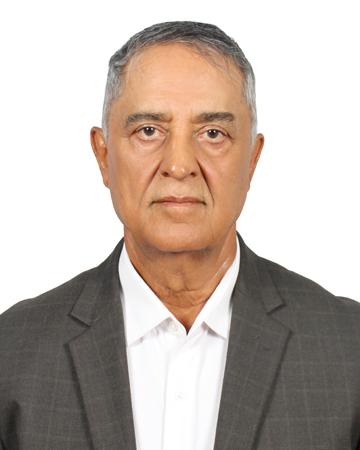
Bhairaja Pandey
My story: FIPMO: The Struggle to Give Back
I have always been fascinated by the story of Himalaya Shamsher Jung Bahadur Rana, Nepal’s first Governor of Nepal Rastra Bank and later a distinguished international civil servant. After retiring from the United Nations, he returned to Nepal. Like many retirees, he initially thought he would spend his time playing golf. But golf could occupy only so many hours of the day. He soon became restless. Here was a man who had served as the first Governor of Nepal Rastra Bank and had subsequently accumulated decades of international experience. Surely, he thought, some of that knowledge could be useful to his country.
He approached the government and made himself available. The response was essentially silence. As he later recalled, there was only one occasion on which the Government sought his advice—and that was because the law specifically required consultation with former Governors of Nepal Rastra Bank. Imagine the frustration. A lifetime of national and international experience was available to Nepal free of charge, yet the country had little interest in using it. Himalaya Shamsher did not give up. Instead, he turned his energies elsewhere. He helped establish Himalayan Bank and later Lumbini General Insurance. Both became successful ventures. The public response to the insurance company was extraordinary: its share offering was reportedly oversubscribed many times over, requiring money to be returned to unsuccessful applicants at considerable administrative expense.
There is an important lesson in this story for FIPMO. Nepal has produced a remarkable number of men and women who have served the United Nations, the World Bank, the Asian Development Bank and other multilateral institutions. They have negotiated international agreements, managed crises, administered large organizations, designed development programmes, handled public finance, built institutions and witnessed both successful and failed policies across the world. Many have now returned home. They are not looking for jobs. They are not seeking positions, salaries or recognition.
They simply want to give something back. Yet the difficulty encountered by Himalaya Shamsher continues in different forms today. Governments are often reluctant to seek outside advice, even when it is freely offered. Officials may understandably wonder whether former international professionals are trying to tell them how to run the country, interfere in their responsibilities or overshadow them.
FIPMO must understand this concern. Our purpose should never be to replace those who have been entrusted with governing Nepal. Nor should we arrive carrying prescriptions from Washington, New York, Geneva or elsewhere and assume that solutions successful abroad can simply be transplanted to Nepal. Our role should be much more modest. We are here to help those in government succeed.
This is particularly important today. A new generation has entered public life. Many are young, energetic and determined to change the country. Their relative lack of governmental experience should not necessarily be considered a weakness. They bring something equally valuable: courage, fresh thinking and freedom from many of the habits of the past. What they cannot possess, simply because of their age, is decades of accumulated experience.
That is where FIPMO can help. We have seen policies succeed. We have also seen them fail spectacularly. We have witnessed governments make mistakes that appeared insignificant initially but became enormously costly later. If sharing those experiences can help a young minister, mayor, parliamentarian or senior official avoid even one major mistake, our contribution will have been worthwhile.
But first we must earn their confidence. FIPMO does not need a hundred projects. We need a few success stories. Let us identify a small number of areas where the Government genuinely wants assistance. Let us provide discreet, practical and professional support. Let the responsible ministers and officials retain ownership of the decisions and receive the credit for their success. We should remain in the background. If they succeed, we succeed.
Once a few such examples demonstrate that FIPMO is not competing with government, not seeking positions and not trying to overshadow anyone, attitudes may begin to change. Himalaya Shamsher encountered rejection and responded by building institutions that became successes. His experience should therefore inspire rather than discourage us. The struggle to make Nepal appreciate and utilize the enormous reservoir of experience represented by its returning international professionals will continue. We should expect frustration. We should expect doors not to open. We should expect our intentions occasionally to be misunderstood.
But we must persist. Our generation has accumulated knowledge and experience partly because Nepal gave us the opportunity to go out into the world. Perhaps the most meaningful final chapter of our professional lives is to bring some of that experience home.
Not to govern.
Not to lecture.
Not to seek recognition.
But to help the next generation govern better than we did—and to help them avoid some of the pitfalls that we have already witnessed around the world. That should be the mission of FIPMO. And perhaps, like Himalaya Shamsher, we should remember that when one door remains closed, we keep knocking—or find another door. The struggle continues. But so must we.
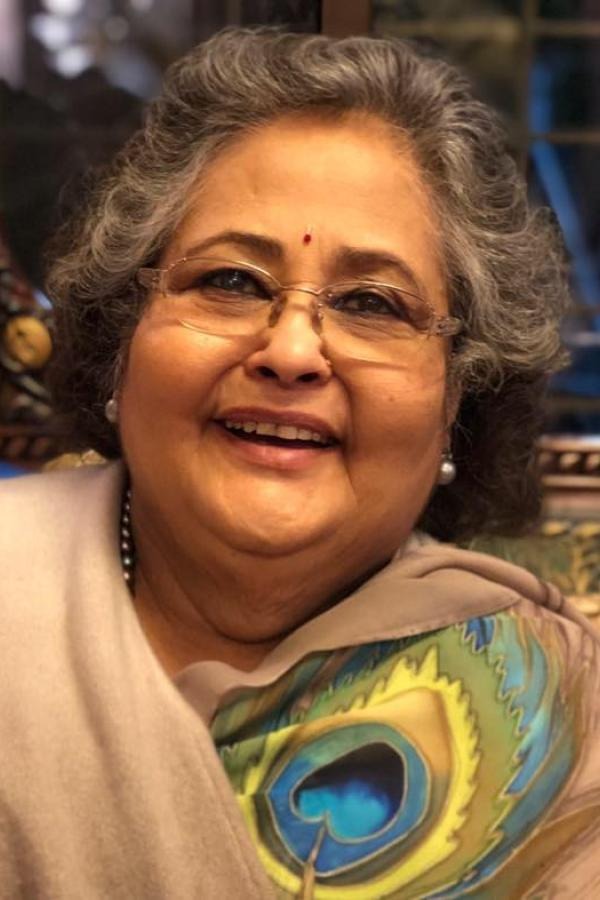
Chandni Joshi
The first time I heard about FIPMO was from Bhim Udas ji. He came to my home and asked whether I would be interested in joining FIPMO. My immediate question was: “I hope this has nothing to do with politics, because whatever institution I am involved with must always remain above politics.”
And that was how my journey with FIPMO began.
Our first meeting was at Bhim ji’s apartment. I still remember meeting Bhairaja ji for the first time, along with Madan ji and several others. In those early meetings, we spent considerable time discussing what FIPMO should stand for - its objectives, goals and vision, and the kind of institution we wanted to build.
A Shared Commitment to Give Back
There was a remarkable clarity among all of us about our underlying philosophy.
Each of us had accumulated considerable professional experience, both in Nepal and internationally. We had worked in different countries, encountered different systems and approaches, and learnt from a wide range of experiences. We had brought those learnings back to Nepal, and we felt a strong responsibility to give something back to our country.
We were therefore united by a simple but powerful commitment: FIPMO was not about seeking credit, power or financial gain. It was about making our knowledge, experience and networks available for the larger good of Nepal. That shared sense of purpose became the foundation of FIPMO.
Drafting the FIPMO Constitution
One of my most vivid memories from those early days is of sitting together at Imago, a small restaurant with a private room, while we worked on the Constitution of FIPMO. We did not simply draft the Constitution - we carefully crafted it. We debated almost every sentence. We discussed what our experiences had taught us, what FIPMO should aspire to achieve, and how our collective expertise could be put to meaningful use. Two principles that emerged from those discussions remain particularly memorable to me.
The first was our willingness to “agree to disagree.” We recognised that people with diverse professional experiences and perspectives would not always see things in the same way. What mattered was that we respected one another’s views and remained united by our common purpose.
The second was our commitment to share our expertise and experience with the wider community - including the Government, the United Nations, development organisations, civil society and any institution that could benefit from our collective knowledge.
These principles continue to capture what I believe FIPMO represents.
More Than a Professional Network
There was, however, another dimension of FIPMO that was equally important to me.
I always felt that FIPMO should be more than a professional forum. It should also be a community - a place where we could talk about our personal achievements, challenges and anxieties. Our professional lives are inevitably connected to our personal lives. If we were going to work together effectively, we also needed to know one another as people. I strongly believed that we should be able to enjoy each other’s company, share a laugh and simply have fun together. After all, being surrounded by like-minded people is a privilege in itself. I remember when Suresh ji was Chair and Surendra Pandey ji, Puru ji and I were members of the Board. One practice that I particularly valued was taking some time at the beginning of each meeting - before moving to the formal agenda - to share what had happened in our lives since the previous meeting, both professionally and personally.
It was a simple practice, but I found it immensely fulfilling.
We came to know more about each other’s achievements, aspirations, strengths and, equally importantly, the struggles we were experiencing. It strengthened our relationships, helped us understand one another better and ultimately made decision-making easier. I respect every member of FIPMO equally, but I feel a particularly close bond with colleagues with whom I had the opportunity to share those experiences. Even today, I would encourage the Executive Committee to consider keeping some time for such personal sharing. It may appear informal, but I believe it can be an extremely powerful tool for team-building and institutional cohesion.
Contributing to Nepal’s Constitutional Process
Another memorable chapter was the period when Nepal’s Constitution was being revised and the Government invited us to provide our recommendations. We held several back-to-back brainstorming sessions. We sat together, discussed, debated and put forward our collective suggestions. Among our recommendations was the view that there should be minimum qualifications and standards for people occupying important public positions. One of our specific suggestions was that Cabinet Ministers should, at the very least, be university graduates. At the time, I remember feeling that many of our recommendations had simply been thrown into the dustbin! Looking at the present, however, I cannot help but smile. Today, members of the Cabinet are generally graduates, with many holding postgraduate qualifications.
Perhaps some of the things we advocated for were not so unreasonable after all! For me, that experience demonstrated the value of having experienced professionals contribute their perspectives to national policy and institution-building. Change does not always happen immediately, but ideas have a way of finding their time.
The Wisdom of Our Patron, Late Himalaya Rana
When I reflect on FIPMO’s journey, I also think with immense gratitude about the guidance we received from our patron, the late Himalaya Rana ji. He generously shared with us the lessons he had learnt through his own experiences. His advice was practical, candid and invaluable. Among the many things he cautioned us about was the importance of not being overly ambitious and of exercising patience, particularly when sharing our expertise with the Government. He also shared his experiences of negotiating with the Government on taxation policy. Through these conversations, we gained a better understanding of how the Government viewed organisations such as ours and how we should approach institutional engagement. Those were precious lessons.
In many ways, they provided us with a practical framework for navigating the complex relationship between expertise, advocacy and government. I sometimes think these lessons should form part of FIPMO’s institutional memory-a set of informal “Dos and Don’ts” that can be passed from one generation of members to the next.
Looking Ahead
I could go on and on. FIPMO has given us many memories, relationships and opportunities to contribute. But if I were to highlight just three things from my journey, they would be these: First, the shared commitment that brought us together-to use our knowledge and experience to give back to Nepal, without seeking personal credit, power or financial gain. Second, the belief that FIPMO should be both a professional platform and a community-a place where we could learn from one another while also valuing friendship and human connection. And third, the importance of institutional memory-the wisdom shared by those who came before us and the responsibility we have to pass those lessons on to those who come after us.
When I look back, I feel proud of what we collectively envisioned and built. FIPMO represents not just professional expertise, but also the values of integrity, mutual respect, service and commitment to Nepal. I would like to thank Madam Chair for giving me this opportunity to share a few memories from FIPMO’s journey. And finally, my very best wishes for FIPMO’s new website and for the next chapter of this remarkable institution.
May FIPMO continue to bring together knowledge, experience and goodwill in the service of Nepal.